Kyoto National Museum 2025 Summer Lecture Series
 pinyiah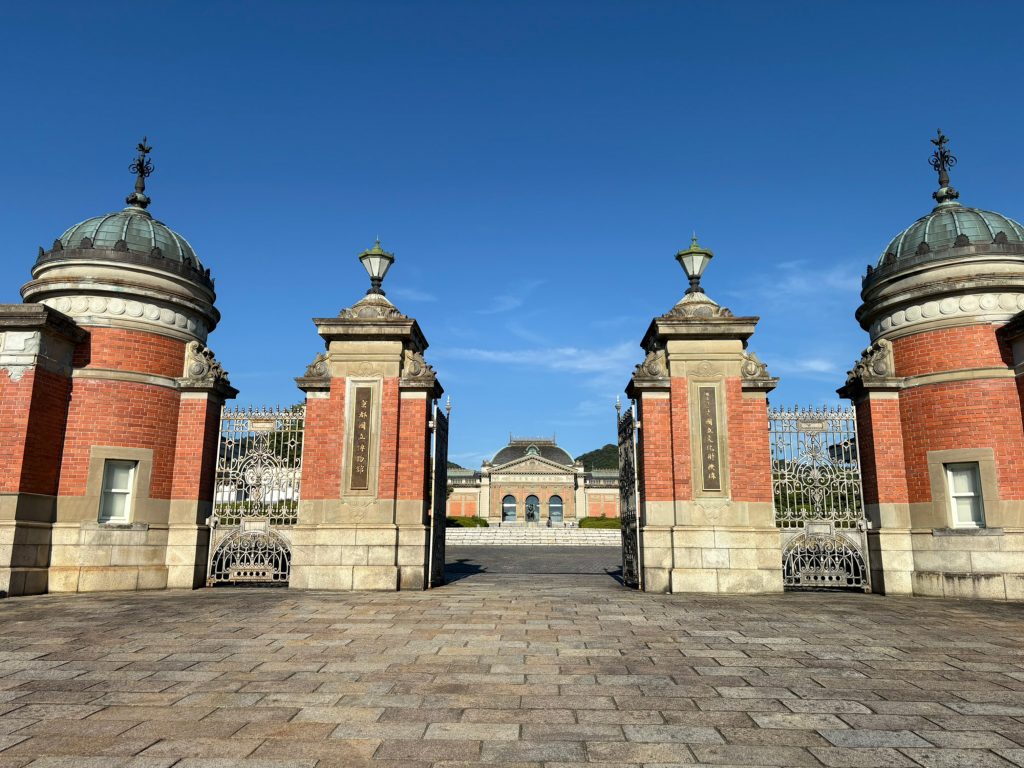
On August 1 and 2, I attended the Kyoto National Museum’s 2025 Summer Lecture Series. This year’s theme was “Rethinking National Treasures.”
Incidentally, when I type kokuho saiko (“Rethinking National Treasures”) in Japanese, my computer sometimes converts it to Kokuho saiko—“National Treasures are the best.” That somehow feels correct too.
This spring, I had already seen many National Treasures while visiting three major exhibitions: Japan: A Cultural Melting Pot—The Crossroads of Artistic Exchange at the Kyoto National Museum, The Super National Treasure Exhibition at the Nara National Museum, and Japanese National Treasures at the Osaka City Museum of Fine Arts.
Under Japan’s Act on Protection of Cultural Properties, National Treasures are defined as Important Cultural Properties that are of particularly high value from the viewpoint of world culture and are exceptional treasures of the nation. This summer lecture series offered an opportunity to reconsider what such “National Treasures” mean.
Kyoto National Museum 2025 Summer Lecture Series
On the first day, Dr. Michihiko Mori, Senior Curator at the Kyoto National Museum, gave a lecture titled “Masterpieces of Medieval Ink Painting and Japanese Art History.” Although the lecture centered on medieval ink painting, it also offered what felt like a broad overview of the history of Japanese art.
I also attended “National Treasures of Classical Books: Their Appeal,” presented by Dr. Tomohide Uesugi, Senior Curator at the Kyoto National Museum. His explanation helped me form a much clearer picture of the differences among calligraphy, classical books, and historical documents. He also explained very clearly why older manuscript copies are particularly important.
Because I am personally interested in rituals and performing arts, I found “The People’s ‘Treasures’: Ideas and Systems for the Protection of Folk Cultural Properties,” by Shunichiro Maeda, Senior Specialist for Cultural Properties in the Folk Cultural Properties Division of the Agency for Cultural Affairs, especially interesting.
On the second day, Dr. Ken Okada, Researcher Emeritus at the Tokyo National Research Institute for Cultural Properties, gave a lecture titled “Looking Back on Japan’s Cooperation in the Preservation of Chinese Cultural Heritage.” Through his own experiences, we were able to hear about Japan’s contributions to cultural heritage preservation activities not only domestically, but also in countries around the world.
The lecture by Yoshitoyo Ohara, Head of the Education Department at the Kyoto National Museum, was also extremely interesting. Focusing mainly on Fujiwara-period Buddhist paintings, it gave me an opportunity to reconsider Japanese aesthetic sensibilities, including the Japanese sense of color and the relationship between color and perspective.
Up to that point, the lectures had largely dealt with Japanese cultural properties. The final lecture of the series, however, was “Italian Cities and Art,” by Professor Kikuo Miyashita of the Graduate School of Humanities at Kobe University, and focused specifically on Italian art.
One of the points that stayed with me was that the centers of Italian art shifted from one city to another depending on the period, and that each city developed its own distinctive landscape and artistic culture. He also noted a contrast with countries such as France and the United States, where artworks are often gathered together in museums: in Italy, art is not necessarily concentrated in a single institution in the same way.
Photography and the publication or redistribution of lecture handouts were prohibited, so I have limited this article to my own impressions of the lectures.
During the lecture series, participants were free to visit all of the museum’s exhibitions, including the special exhibition Illustrated Origins of Shakado. I used the lunch breaks and the time between the end of the lectures and museum closing to view the exhibitions.
The Kyoto National Museum’s Heisei Chishinkan Wing is a beautiful, modern building. The museum grounds as a whole are also spacious and rich in greenery, and simply spending time there was relaxing.
Thank you very much for two wonderful days.